Weight Management12 September 2026 · 4 min read
Natural weight loss products in Pakistan
Weight loss products marketed as natural rarely explain what that means. Here is what to actually check before buying a natural weight loss product in Pakistan.
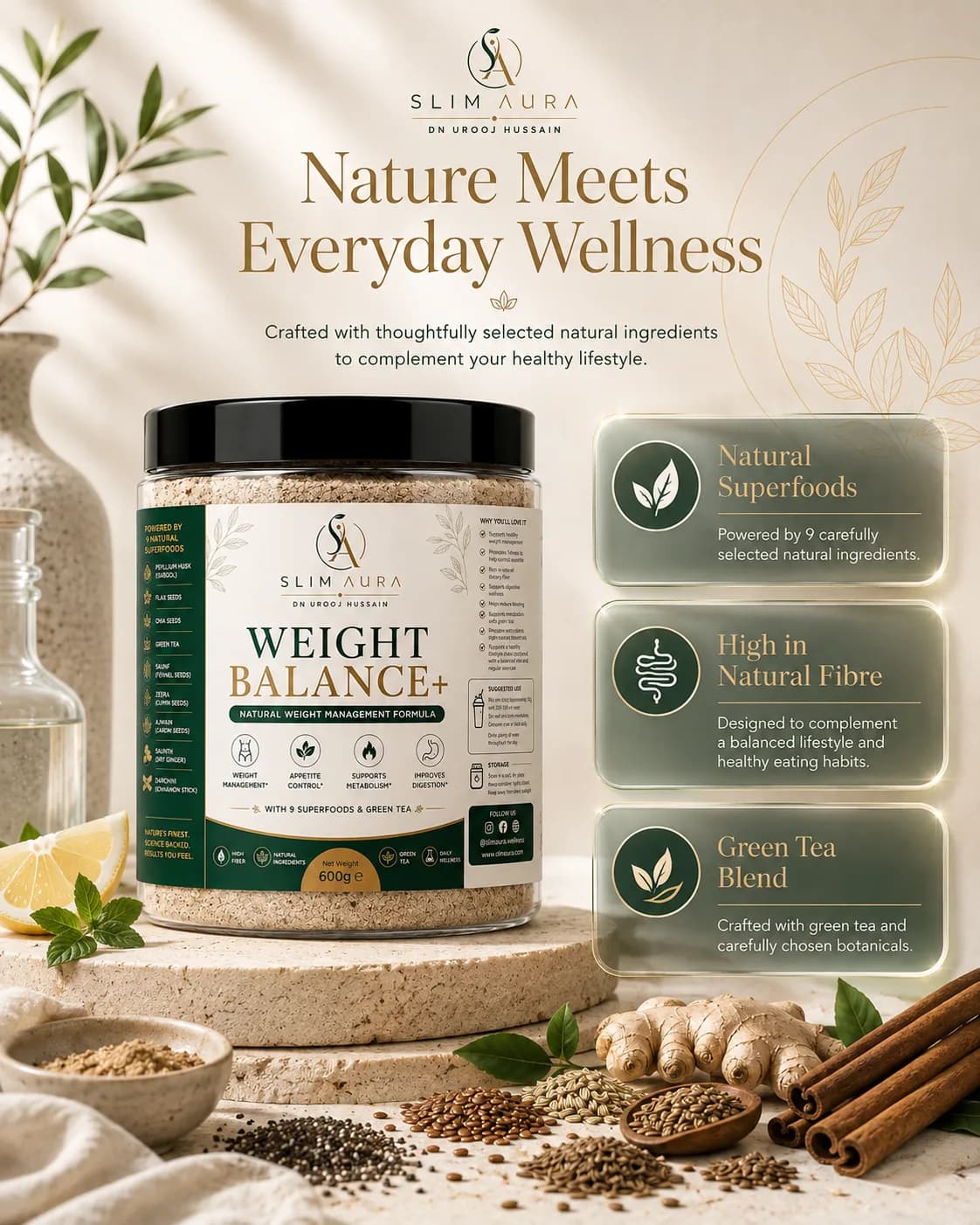
"Natural" is one of the most printed words on a supplement shelf in Pakistan, and one of the least regulated. It appears on genuinely well-formulated products and on ones that are little more than flavoured powder in a nice jar. The word alone tells you nothing about whether something works — what matters is what is actually inside.
What "natural" should actually mean
When the word is used honestly, it means three things: ingredients you could name and picture in a kitchen, no undisclosed fillers or proprietary blends hiding the real dose, and a mechanism that is explained plainly rather than implied. Psyllium husk absorbing water and expanding in the stomach is a mechanism. "Detoxifies your body naturally" is not — it is a phrase with no defined meaning, and that vagueness is usually the point.
Questions worth asking before you buy
- Does the brand disclose exact quantities per ingredient, not just a total blend weight?
- Is there a batch number, expiry date and manufacturer address printed clearly?
- Does the marketing make any claim about disease, rapid results or guaranteed weight loss?
- Is the brand contactable — a real address, a real person behind it — or only a page selling through ads?
The specific risks worth knowing in the Pakistani market
Two patterns come up often in my practice. The first is products imported informally with no local batch testing or clear ingredient disclosure, sold mainly through social media ads with dramatic before-and-after claims. The second is products that genuinely contain natural ingredients but at doses too low to matter — technically accurate labelling, practically useless amounts.
What genuinely natural, well-dosed ingredients look like
Fibre sources such as psyllium husk, chia and flax are well studied for supporting fullness and digestive regularity when taken at meaningful daily doses — typically several grams, not a token amount. Botanicals like fennel, ginger and cinnamon have a long history of traditional use for digestive comfort, and green tea contributes naturally occurring antioxidants. None of these claim to work alone, and that restraint is itself a signal of honesty.
“A natural ingredient list is not automatically a good product. It is a good starting point, and then the dose and the honesty of the claims decide the rest.”
Where this leaves Weight Balance+
Weight Balance+ is formulated to meet the standard above — nine disclosed ingredients at stated doses, manufactured and labelled for the Pakistani market, with a role limited to supporting fibre intake and digestive wellness alongside a balanced diet. Results still depend on the rest of the picture: what you eat, how you move, how you sleep and how consistently you keep at it. Any natural product that claims otherwise, in Pakistan or anywhere else, is the one worth being sceptical of.
This article is provided for general informational purposes and does not constitute medical advice, diagnosis or treatment. Speak to your physician or a qualified practitioner about your own circumstances before making changes, particularly if you are pregnant, nursing, taking medication or managing a medical condition.

Written by
DN Urooj Hussain
Clinical Dietitian & Founder · Doctor of Nutrition (DN)
A clinical dietitian who built the product she kept wishing she could hand her patients.
More writing like this, twice a month
Related articles
21 August 2026 · 3 min read
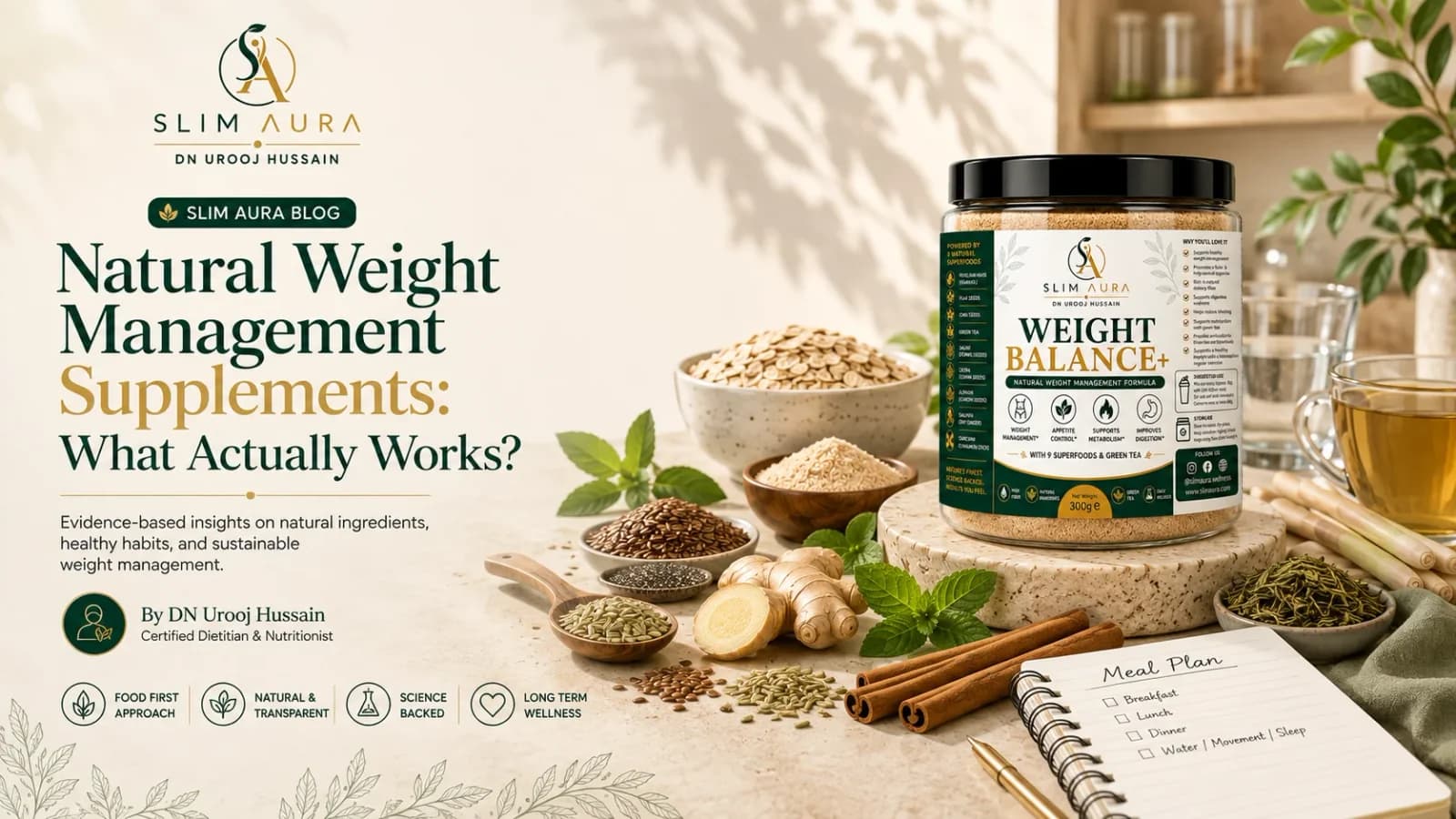
Natural approaches to weight management
"Natural" sells a lot of products and explains very little. Here is what genuinely moves the needle — food first, then movement and sleep, always.
Read article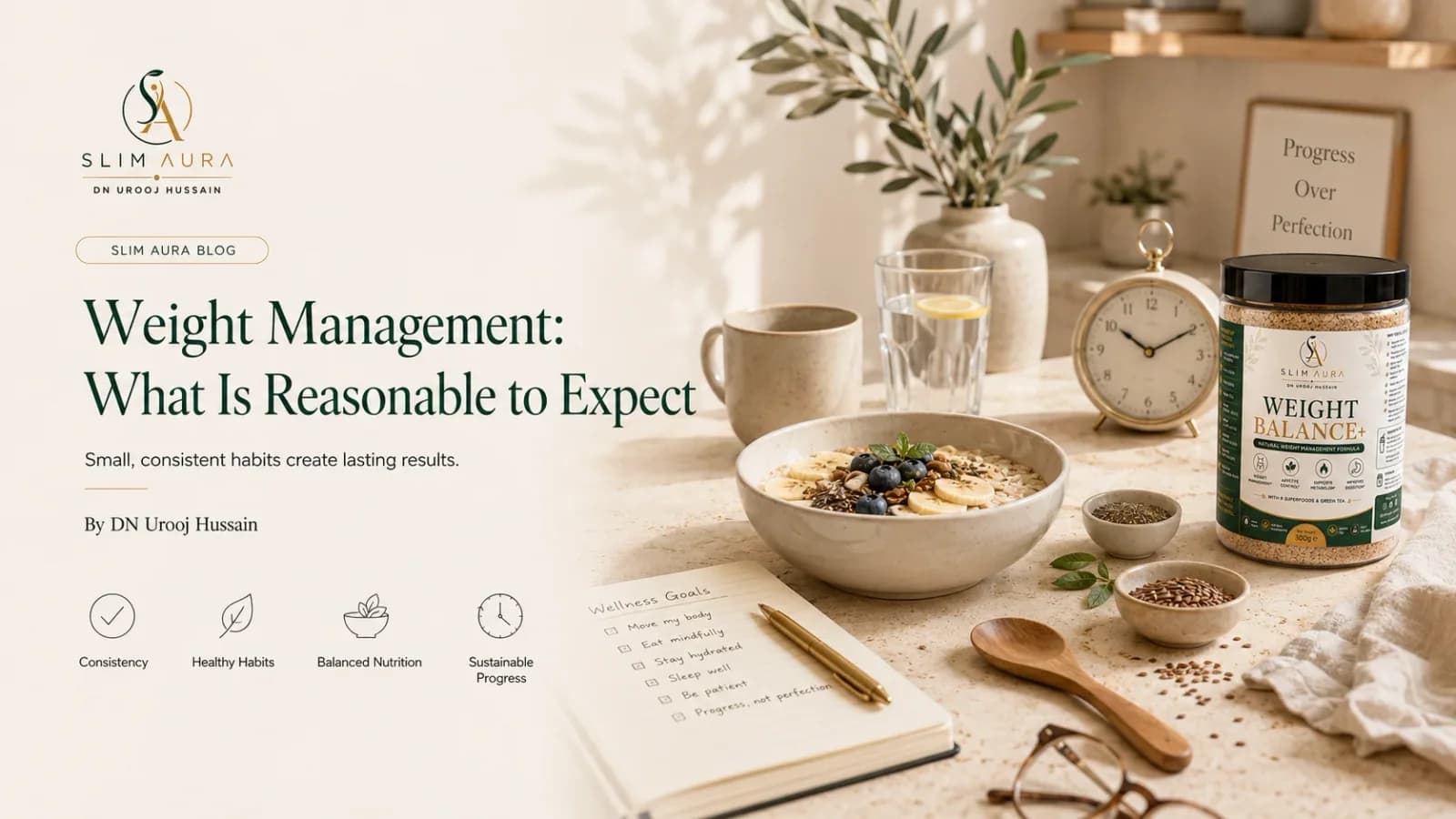
12 June 2026 · 4 min read
Weight management: what is reasonable to expect
An honest account of pace, plateaus and why the number on the scale is a poor daily metric.
Read article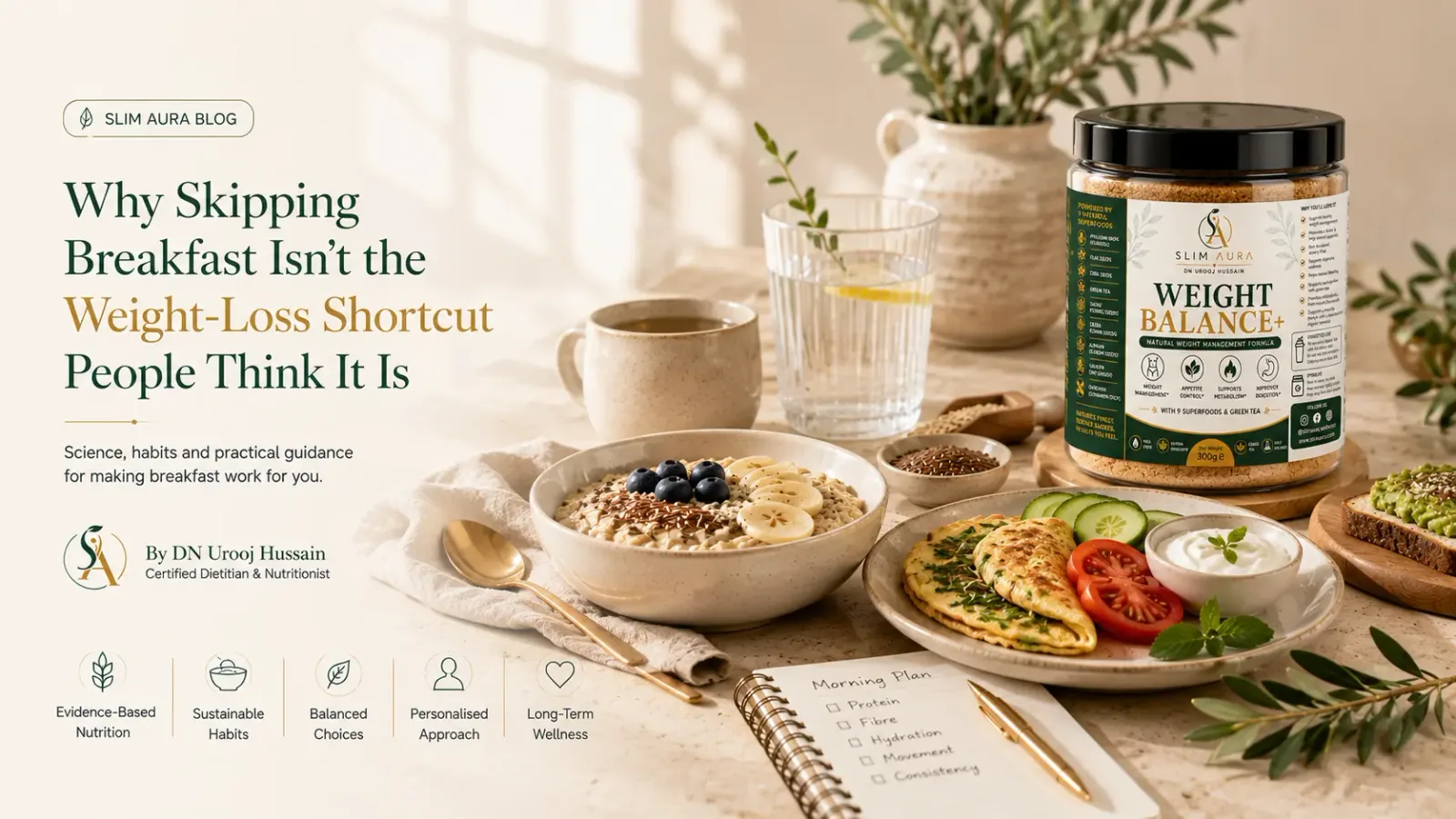
23 August 2026 · 9 min read
Why skipping breakfast isn't the shortcut
Skipping breakfast isn't automatically good or bad for weight management. What matters more is whether the eating pattern you choose actually fits your life.
Read article