Weight Management23 September 2026 · 4 min read
Zeera water for weight loss: what actually happens
Cumin (zeera) water is a popular Pakistani weight loss remedy. Here is what it can genuinely do — and what the hype gets wrong — from a dietitian.
Zeera water has had a moment on Pakistani social media for a few years now — a morning ritual credited with everything from flat stomachs to dramatic fat loss. Some of that reputation is deserved. Most of it is exaggerated. Here is the honest version: what cumin water can genuinely do, what it cannot, and why the way it is usually marketed sets people up for disappointment.
What zeera water actually is
The traditional preparation is simple: a teaspoon of cumin seeds soaked in water overnight, then strained and drunk first thing in the morning, sometimes warmed. Some variations boil the seeds instead of soaking them. Either way, the result is a mild, slightly earthy-tasting water — not a dramatic tonic, whatever the reels suggest.
What the research actually shows
Cumin has been studied more than most kitchen spices used in weight management claims, which is genuinely worth noting — this is not an ingredient with zero backing. A systematic review and meta-analysis of randomized controlled trials found modest associations between cumin supplementation and improvements in several components of metabolic syndrome, including waist circumference, in adults with metabolic disorders.
The key qualifiers matter enormously here: modest, and typically alongside a calorie-controlled diet in the studies reviewed, at a specific studied dose — not "drink this water and the rest does not matter," which is how it is overwhelmingly marketed. The research that exists does not show cumin water alone, without dietary changes, producing meaningful weight loss on its own. It shows a small additive effect on top of an already-controlled diet, which is a very different, much less exciting claim than what circulates online.
What zeera water may genuinely support
Setting the exaggerated claims aside, there is a reasonable, honest case for cumin water as part of a broader routine.
- Digestive comfort — cumin has traditional and some evidence-based use for supporting digestion, similar in category to fennel and ajwain, and this is arguably its more solid, better-established role.
- A hydration habit — a morning glass of zeera water is, first and foremost, a glass of water, and starting the day with fluid intake is a genuinely useful habit regardless of what is dissolved in it.
- A small additive metabolic effect, specifically when paired with an already reasonable, calorie-appropriate diet — not as a replacement for one.
None of this amounts to "burns fat" or "melts belly fat overnight," phrases that show up constantly around this remedy and that no legitimate research on cumin actually supports.
Why the marketing gets ahead of the evidence
This pattern is common with kitchen-remedy weight loss claims generally: a small, genuine study finding gets picked up, stripped of its qualifiers, and repackaged as a standalone miracle. Zeera water is not unique in this — it is simply one of the more visible recent examples in the Pakistani wellness space.
“The honest version is less shareable but more useful: cumin water is a reasonable, low-cost habit that may offer a small supporting benefit — not a weight loss method on its own.”
How to actually use it, if you want to
- Soak a teaspoon of cumin seeds in a glass of water overnight.
- Strain, or drink with the seeds, which is also traditional, first thing in the morning.
- Treat it as a hydration and digestive-comfort habit — not a weight loss intervention on its own.
- Keep the actual levers that matter — food quality and quantity, movement, sleep — as the real focus of any weight management effort.
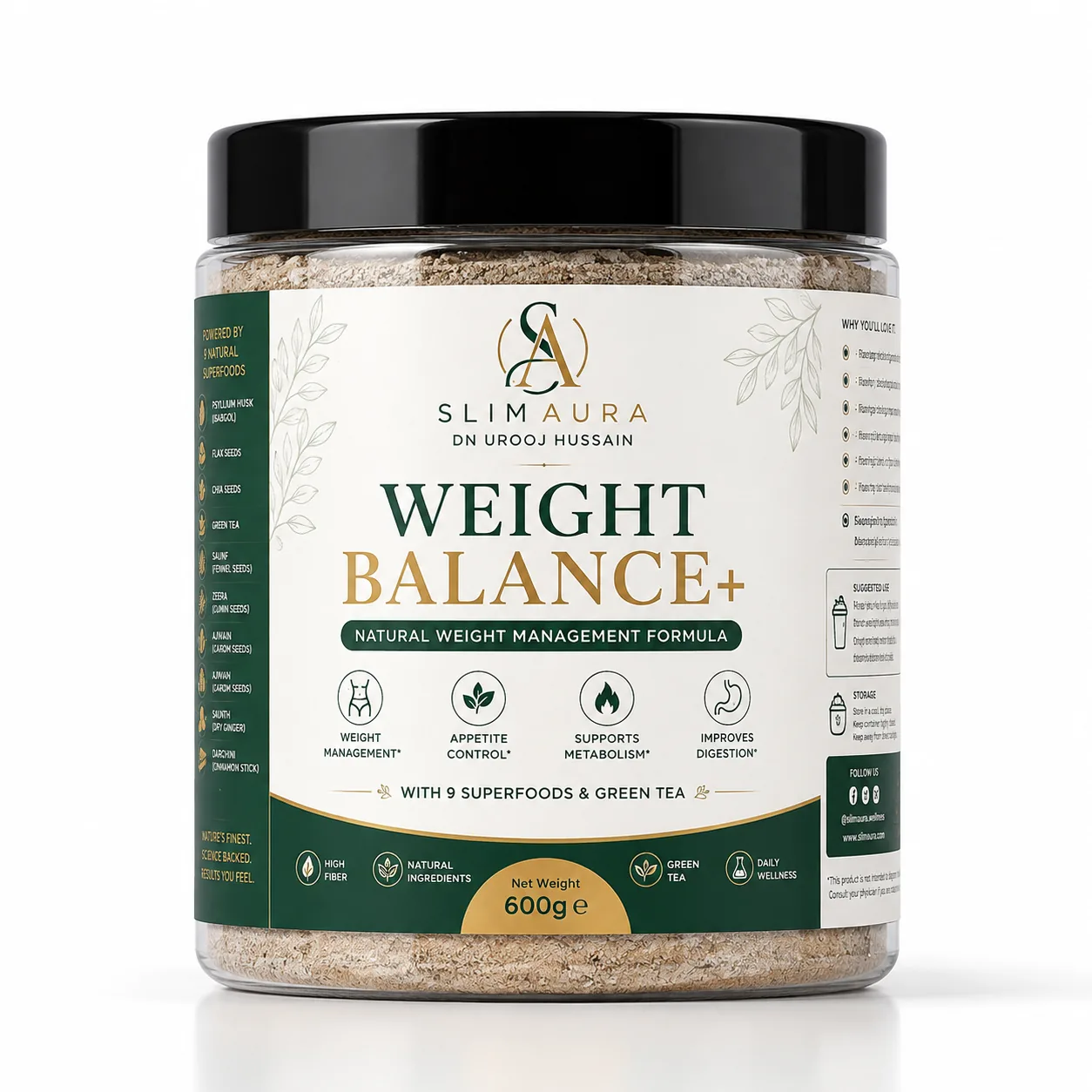
Weight Balance+ includes zeera alongside eight other whole-food ingredients, including ajwain and fennel, formulated at a meaningful dose as part of a daily fibre blend — rather than relying on a single spice water to do work it was never going to do alone.
This article is provided for general informational purposes and does not constitute medical advice, diagnosis or treatment. Speak to your physician or a qualified practitioner about your own circumstances before making changes, particularly if you are pregnant, nursing, taking medication or managing a medical condition.

Written by
DN Urooj Hussain
Clinical Dietitian & Founder · Doctor of Nutrition (DN)
A clinical dietitian who built the product she kept wishing she could hand her patients.
From the YouTube channel
Don’t give cow/buffalo milk to your baby below One year |Dietitianuroojhussain|
Diet Plan For Menopause | Common Symptoms of Menopause? | what is the age for Menopause?
important tests before marriage | Shadi Se Pehlay Konse Test Karwane Chahye?
More writing like this, twice a month
Related articles
21 August 2026 · 3 min read
Natural approaches to weight management
"Natural" sells a lot of products and explains very little. Here is what genuinely moves the needle — food first, then movement and sleep, always.
Read article
12 June 2026 · 4 min read
Weight management: what is reasonable to expect
An honest account of pace, plateaus and why the number on the scale is a poor daily metric.
Read article
23 August 2026 · 9 min read
Why skipping breakfast isn't the shortcut
Skipping breakfast isn't automatically good or bad for weight management. What matters more is whether the eating pattern you choose actually fits your life.
Read article