Weight Management10 December 2026 · 4 min read
Diabetic diet plan Pakistan: what to eat and avoid
A practical, diabetes-friendly way to eat real Pakistani food — rice, roti, daal and all — rather than a diet plan imported from somewhere else. From a clinical dietitian and certified diabetes educator.
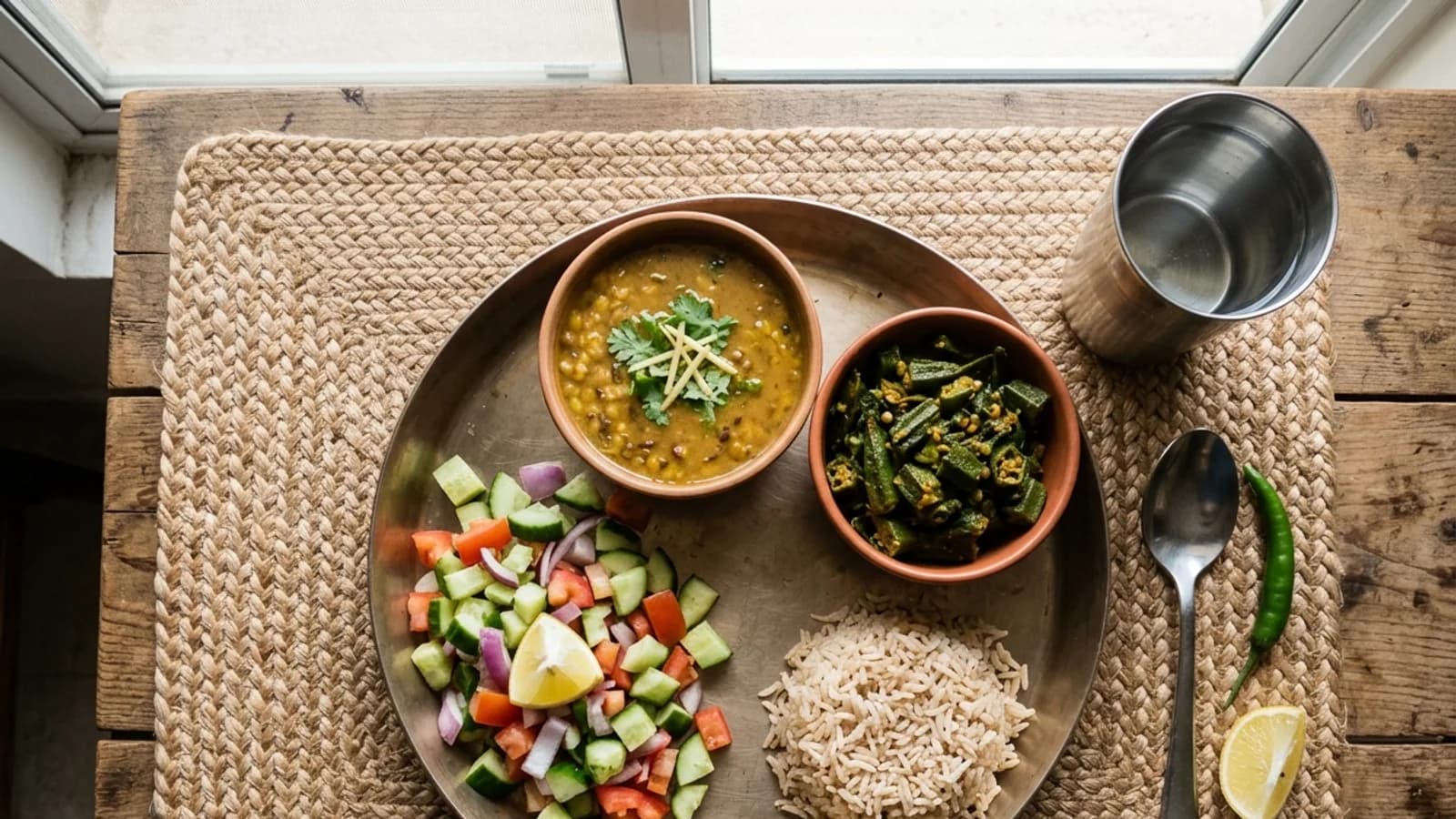
Most diabetic diet advice patients arrive with was written for a different plate entirely. Real guidance for managing diabetes in a Pakistani household has to start from rice, roti and daal — not replace them with something unfamiliar.
Rice vs roti isn't really the right question
White rice has a glycemic index of around 73, whole wheat roti sits lower at roughly 62, and certain basmati varieties can be as low as 50 to 58 — so roti is generally the gentler option, but the gap matters less than most people assume. Portion size and what the grain is eaten alongside affect blood sugar response more than which staple you choose.
The plate method, adapted for a Pakistani thali
A simple framework translates well here: half the plate as vegetables and salad, a quarter as protein or daal, and a quarter as grain — rice or one roti. In practice, that looks like a generous portion of sabzi and salad, a reasonable serving of daal, chicken or fish, and a measured half-cup of rice or a single roti alongside it, rather than a plate that is mostly rice with everything else as a side note.
- Choose basmati or parboiled rice over regular white rice where possible.
- Measure your grain portion rather than estimating by eye — it is the single most underestimated variable.
- Always pair rice or roti with daal, sabzi and salad, never eaten alone.
- Avoid fried items at the same meal as a full grain portion — the combined load is harder on blood sugar than either alone.
- Keep fruit as a separate small portion, spaced away from the grain portion of the meal.
Where many diabetic diets in Pakistan go wrong
Skipping meals earlier in the day and then eating a large dinner is one of the most common patterns I see — it tends to produce a bigger blood sugar swing than three steadier, balanced meals would. Cutting out rice and roti entirely, without a real substitute, is another: it is rarely sustainable long-term, and the relapse that follows strict restriction is often worse than a moderate, consistent pattern would have been.
“The diabetic diets that actually work long-term are the ones that still look like a real Pakistani meal. The ones built around restriction and imported food lists rarely survive past the first month.”
For more on building a realistic, Pakistani-food-based eating pattern more broadly, see Desi Diet Plan for Weight Loss. If you would like a diabetes-specific plan built around your own labs and medication, book a consultation.
This article is provided for general informational purposes and does not constitute medical advice, diagnosis or treatment. Speak to your physician or a qualified practitioner about your own circumstances before making changes, particularly if you are pregnant, nursing, taking medication or managing a medical condition.

Written by
DN Urooj Hussain
Clinical Dietitian & Founder · Doctor of Nutrition (DN)
A clinical dietitian who built the product she kept wishing she could hand her patients.
From the YouTube channel
When to Start Weaning Food? | Baby Ko Solid Food Kab Dena Chahiye? | Dn Urooj Hussain
How To Reverse Fatty Liver | Jigar Ki Charbi Ka Ilaj | Fatty Liver Treatment Symptoms Urdu Hindi
Multivitamin for women after the age of 40 | Multivitamin to Take in Menopause | Dn. Urooj Hussain
More writing like this, twice a month
Related articles

21 August 2026 · 3 min read
Natural approaches to weight management
"Natural" sells a lot of products and explains very little. Here is what genuinely moves the needle — food first, then movement and sleep, always.
Read article
12 June 2026 · 4 min read
Weight management: what is reasonable to expect
An honest account of realistic pace, plateaus, and why the number on the scale is a poor daily metric to judge progress by.
Read article
23 August 2026 · 9 min read
Why skipping breakfast isn't the shortcut
Skipping breakfast isn't automatically good or bad for weight management. What matters more is whether the eating pattern you choose actually fits your life.
Read article