Women's Wellness29 September 2026 · 4 min read
PCOS diet plan Pakistan: what to eat and avoid
A practical PCOS diet guide for Pakistani food — what to eat, what to limit, and why, from a clinical dietitian and certified diabetes educator.
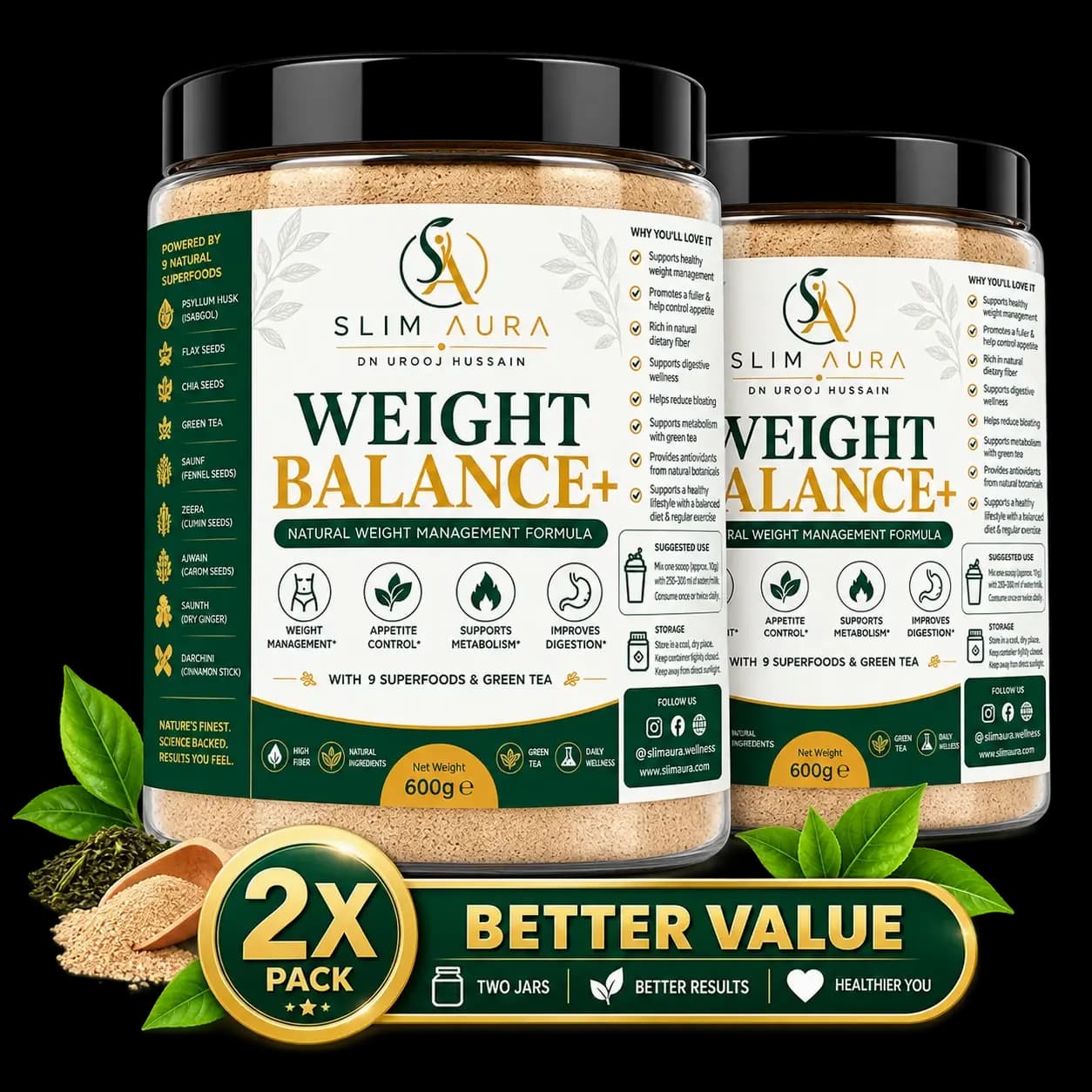
Patients with PCOS are usually handed a list of foods to avoid and very little else — which is the least useful way to approach this. A working PCOS diet is less about restriction and more about which foods, in a normal Pakistani kitchen, actually support the specific way PCOS affects blood sugar and hormones. Here is the practical version: what to prioritize, what to limit, and the reasoning behind each.
Why PCOS needs a different approach than generic weight loss advice
Insulin resistance is present in a large proportion of PCOS cases, which changes how the body processes carbohydrate specifically — not just how much food is eaten overall. This is why the same "eat less" advice given to someone without PCOS often does not produce the same results here. The food choices below are built around that specific mechanism, not general calorie-cutting.
Foods to prioritize
Protein at every meal
Eggs, chicken, fish, paneer, and pulses (chana, masoor, moong) all help blunt the blood sugar spike from a meal, which matters more for PCOS than for most other everyday eating patterns. A breakfast with protein — eggs or a besan chilla rather than plain paratha — is consistently one of the highest-impact changes available.
Fibre-rich vegetables and whole grains
Bhindi, karela, palak, whole wheat roti in place of refined maida, and brown rice or daliya where rice is wanted. Fibre slows carbohydrate absorption, which is directly relevant to insulin resistance.
Low-glycemic fruit, in reasonable portion
Apples, pears, berries, guava and citrus fruits have a gentler effect on blood sugar than very ripe bananas, mangoes in large quantity, or fruit juice — which spikes blood sugar with none of the fibre that whole fruit provides.
Healthy fats
Nuts, seeds, olive oil, and desi ghee in moderate amounts all support satiety and have a more neutral effect on blood sugar than refined vegetable oils used in excess.
Fenugreek (methi) and cinnamon (dalchini)
Both have some evidence for a mild supportive effect on blood sugar regulation, and both are already common in Pakistani cooking — methi paratha, dalchini in chai or daily cooking — making them easy additions rather than new purchases.
Foods to limit, not eliminate
- Refined carbohydrate in large amounts — white naan, maida-based parathas, sugary tea multiple times a day, and white rice in large portions all produce a sharper blood sugar response. The goal is portion and frequency, not zero.
- Sugary drinks and desserts as a daily habit — occasional mithai at a gathering is different from sweetened tea three times a day plus dessert every evening.
- Fried snacks as a default — pakoras and samosas are not forbidden, but reaching for them as the everyday evening snack adds up in a way that is specifically unhelpful for insulin resistance.
- Highly processed packaged foods — these tend to combine refined carbohydrate, added sugar and low fibre in one package, the exact combination that works against PCOS management.
A realistic PCOS-friendly day
- Breakfast: two eggs or a besan chilla with a small side of vegetables, one roti.
- Lunch: daal or a protein-based curry, sabzi, one to two roti (whole wheat where possible).
- Evening: a piece of low-glycemic fruit or a small handful of nuts — not fried snacks by default.
- Dinner: a protein-forward meal with sabzi, kept lighter and earlier where the schedule allows.
Beyond food: what also matters
Diet alone does not fully address PCOS. Resistance-focused movement has a well-documented relationship with insulin sensitivity that cardio alone does not fully replicate, and consistent meal timing — avoiding long gaps followed by a large meal — supports the same blood sugar stability the food choices above are aimed at.
Research specifically on low-glycemic-index eating patterns in PCOS supports this approach: a systematic review and meta-analysis found meaningful improvements in reproductive and clinical markers among women with PCOS following a low-GI diet, reinforcing that the type of carbohydrate — not just the amount of food — matters specifically in PCOS management.
For a full step-by-step walkthrough of building a PCOS eating pattern, see Building a PCOS Diet Plan, Step by Step. Weight Balance+ includes fibre-forward ingredients that can help close a daily fibre gap alongside a plan like this one.
This article is provided for general informational purposes and does not constitute medical advice, diagnosis or treatment. Speak to your physician or a qualified practitioner about your own circumstances before making changes, particularly if you are pregnant, nursing, taking medication or managing a medical condition.
Written by
DN Urooj Hussain
Clinical Dietitian & Founder · Doctor of Nutrition (DN)
A clinical dietitian who built the product she kept wishing she could hand her patients.
From the YouTube channel
Pregnancy PROTECTION Essential Supplements for a Healthy Baby | Dn Urooj Hussain
When to Start Weaning Food? | Baby Ko Solid Food Kab Dena Chahiye? | Dn Urooj Hussain
How To Reverse Fatty Liver | Jigar Ki Charbi Ka Ilaj | Fatty Liver Treatment Symptoms Urdu Hindi
More writing like this, twice a month
Related articles
 Women's Wellness
28 May 2026 · 4 min read
PCOS and everyday nutrition: where to start
Beyond the internet's contradictory advice — the dietary changes that make the most difference, in the order worth attempting them.
Read article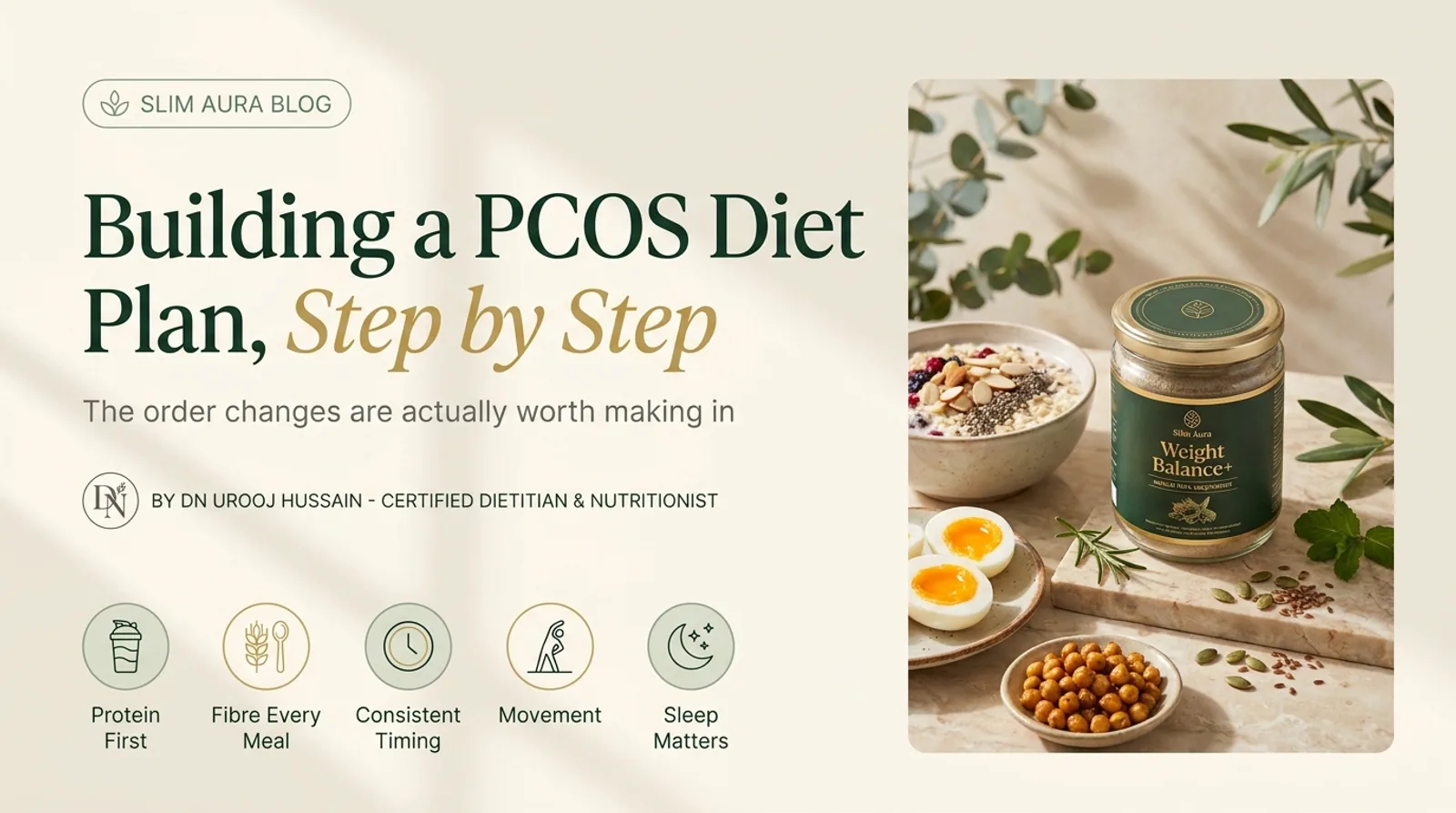
3 September 2026 · 4 min read
Building a PCOS diet plan, step by step
A practical, structured walkthrough of how a PCOS diet plan is actually built in clinic — not a list of foods to avoid, but the order changes are worth making in.
Read article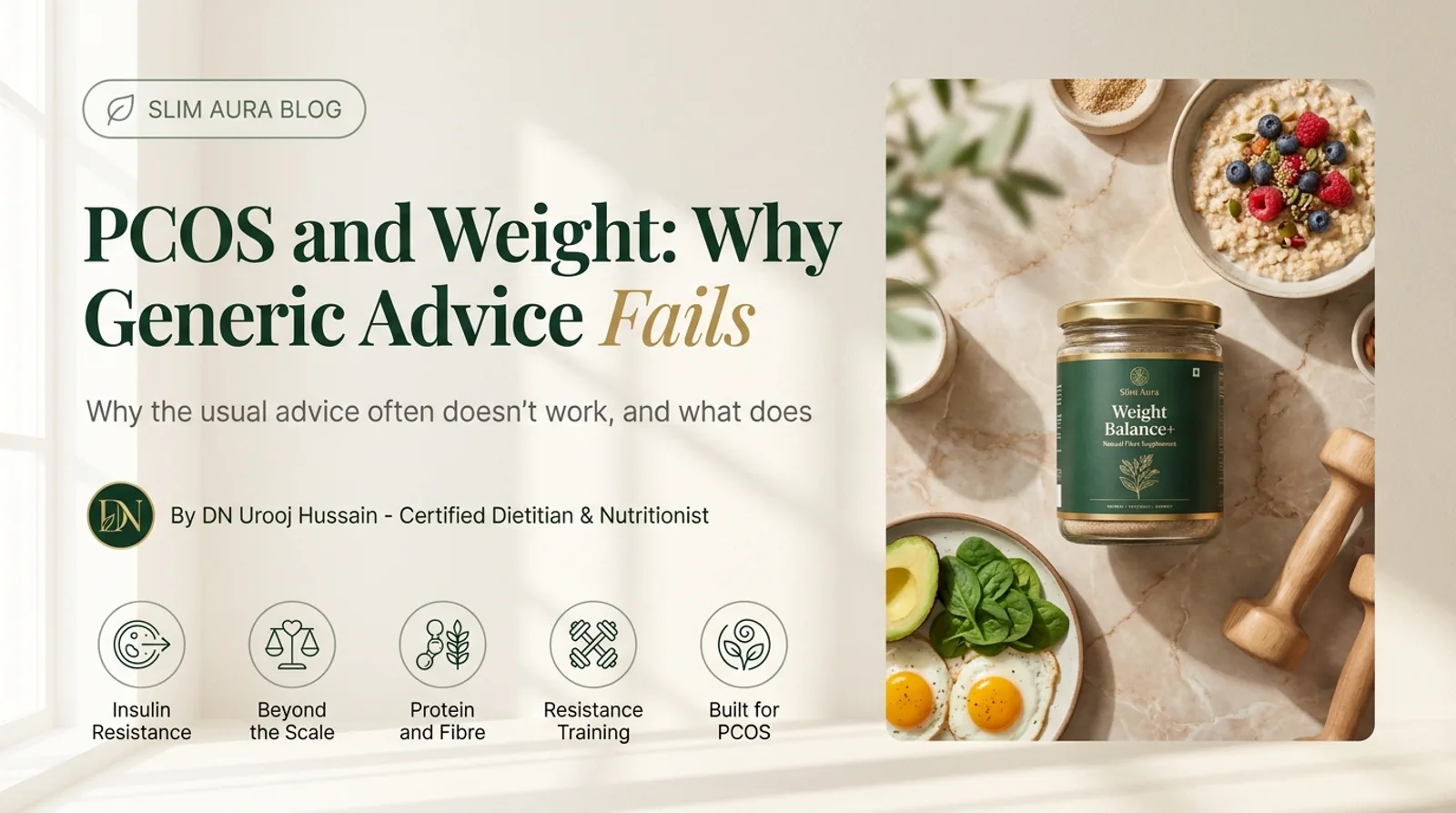
26 August 2026 · 4 min read
PCOS and weight: why generic advice often fails
Standard "eat less, move more" advice often does not work for PCOS, and that is not a willpower problem. Here is what is different, and what helps instead.
Read article