Weight Management28 January 2027 · 4 min read
Intermittent fasting: does it actually work, and is it safe?
It is not magic and it is not a myth — here is what the actual trial evidence says intermittent fasting does, and does not, do better than ordinary calorie control.

Intermittent fasting is one of the questions I get asked about most — usually from someone who has seen it work for a friend and wants to know if it is actually better, or just a different way of doing the same thing.
What the best current trial actually found
A randomized clinical trial published in the Annals of Internal Medicine followed 165 adults with overweight or obesity for a full year, comparing 4:3 intermittent fasting — eating roughly 80 percent less on three non-consecutive days a week — against standard daily calorie restriction. The fasting group lost about 2.9 kilograms more over twelve months. The authors themselves described the benefit as modest.
What the pooled evidence across 99 trials shows
A larger network meta-analysis pooling 99 randomized trials and over 6,500 adults found that every tested approach — intermittent fasting and continuous calorie restriction alike — beat unrestricted eating. Alternate-day fasting was the only fasting method to edge out continuous restriction, and the margin was small. Critically, the benefit over unrestricted eating only showed up in trials lasting 24 weeks or longer — short fasting experiments are not where the real signal is.
So what does this actually mean
Intermittent fasting works, in the sense that it reliably produces a calorie deficit for people who find it easier to follow than counting every meal. It is not metabolically superior to eating the same total calories on a normal schedule — the mechanism is the same deficit, delivered differently. The honest case for it is adherence, not biology.
Who should be cautious
- Anyone with a history of disordered eating — structured restriction windows can be a difficult pattern to introduce.
- People with diabetes on medication that affects blood sugar, who need a fasting plan coordinated with their doctor, not self-designed.
- Pregnant or breastfeeding women, for whom extended fasting windows are not appropriate.
- Anyone who finds fasting leads to overeating once the window opens — at that point it is working against the goal, not for it.
“The patients who do well with fasting are the ones who picked it because it genuinely suits their day — not the ones trying to talk themselves into it because it is the trend.”
If structured fasting during Ramadan is the actual question, see Ramadan Weight Management: A Practical Pakistan Plan. For a wider look at what genuinely moves the needle, see Natural Approaches to Weight Management.
This article is provided for general informational purposes and does not constitute medical advice, diagnosis or treatment. Speak to your physician or a qualified practitioner about your own circumstances before making changes, particularly if you are pregnant, nursing, taking medication or managing a medical condition.

Written by
DN Urooj Hussain
Clinical Dietitian & Founder · Doctor of Nutrition (DN)
A clinical dietitian who built the product she kept wishing she could hand her patients.
From the YouTube channel
Benefits of dates(کھجور) |Dieititan UroojHussain|
Sudden weight changes in newborn babies |Dietitian Uroojhussain|
Sudden weightloss in babies |Dietitianuroojhussain|
More writing like this, twice a month
Related articles
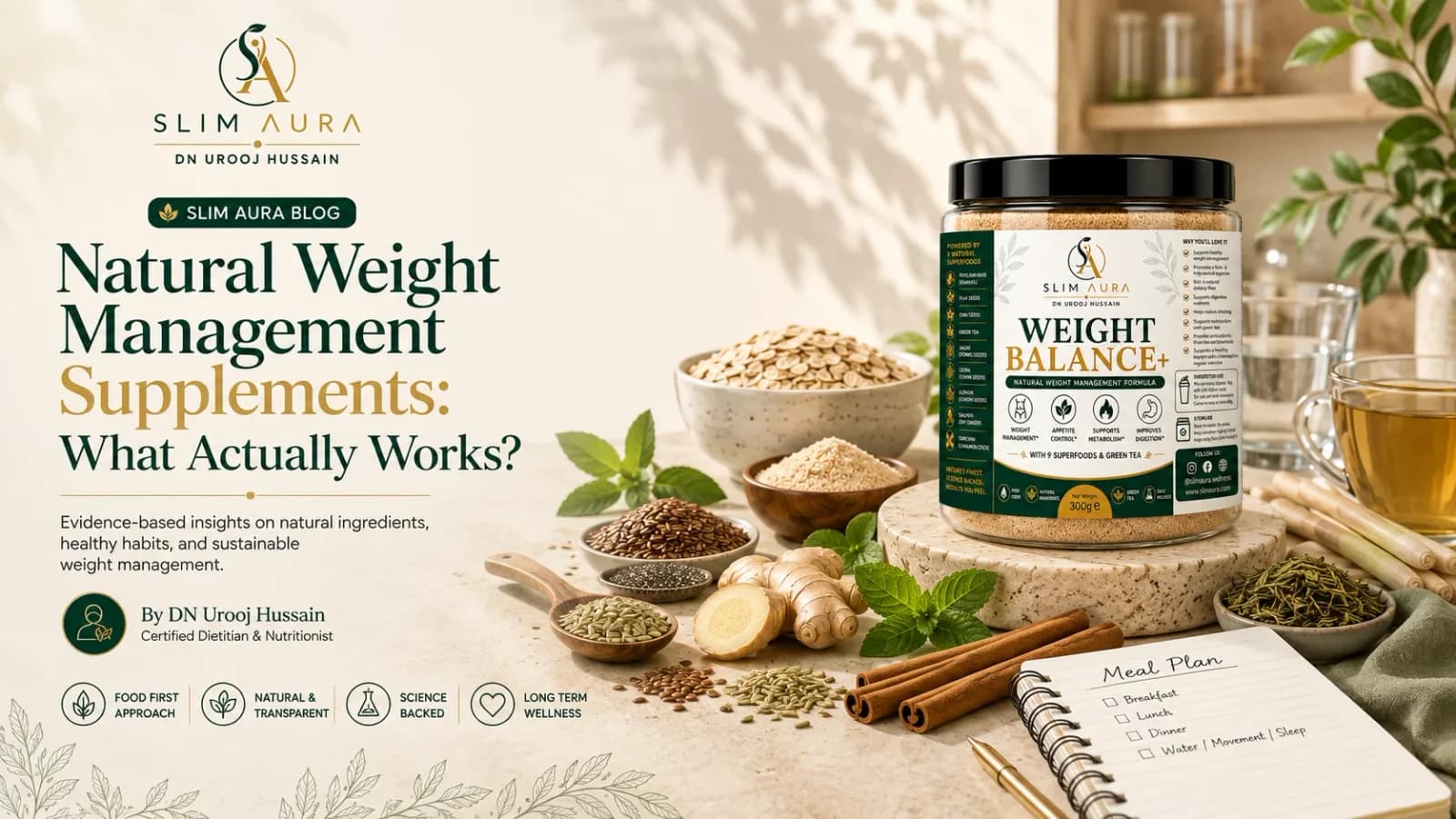
21 August 2026 · 3 min read
Natural approaches to weight management
"Natural" sells a lot of products and explains very little. Here is what genuinely moves the needle — food first, then movement and sleep, always.
Read article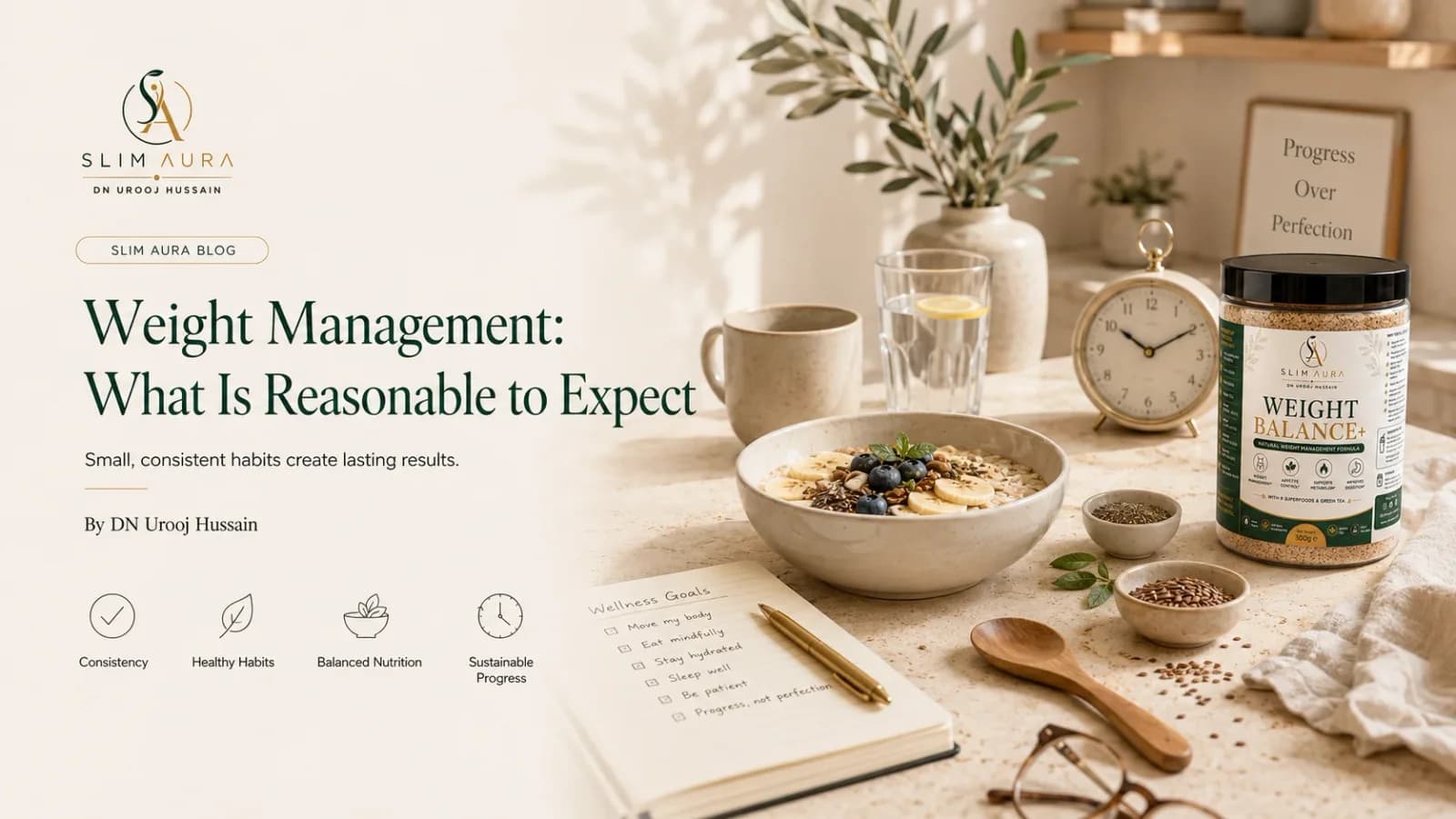
12 June 2026 · 4 min read
Weight management: what is reasonable to expect
An honest account of realistic pace, plateaus, and why the number on the scale is a poor daily metric to judge progress by.
Read article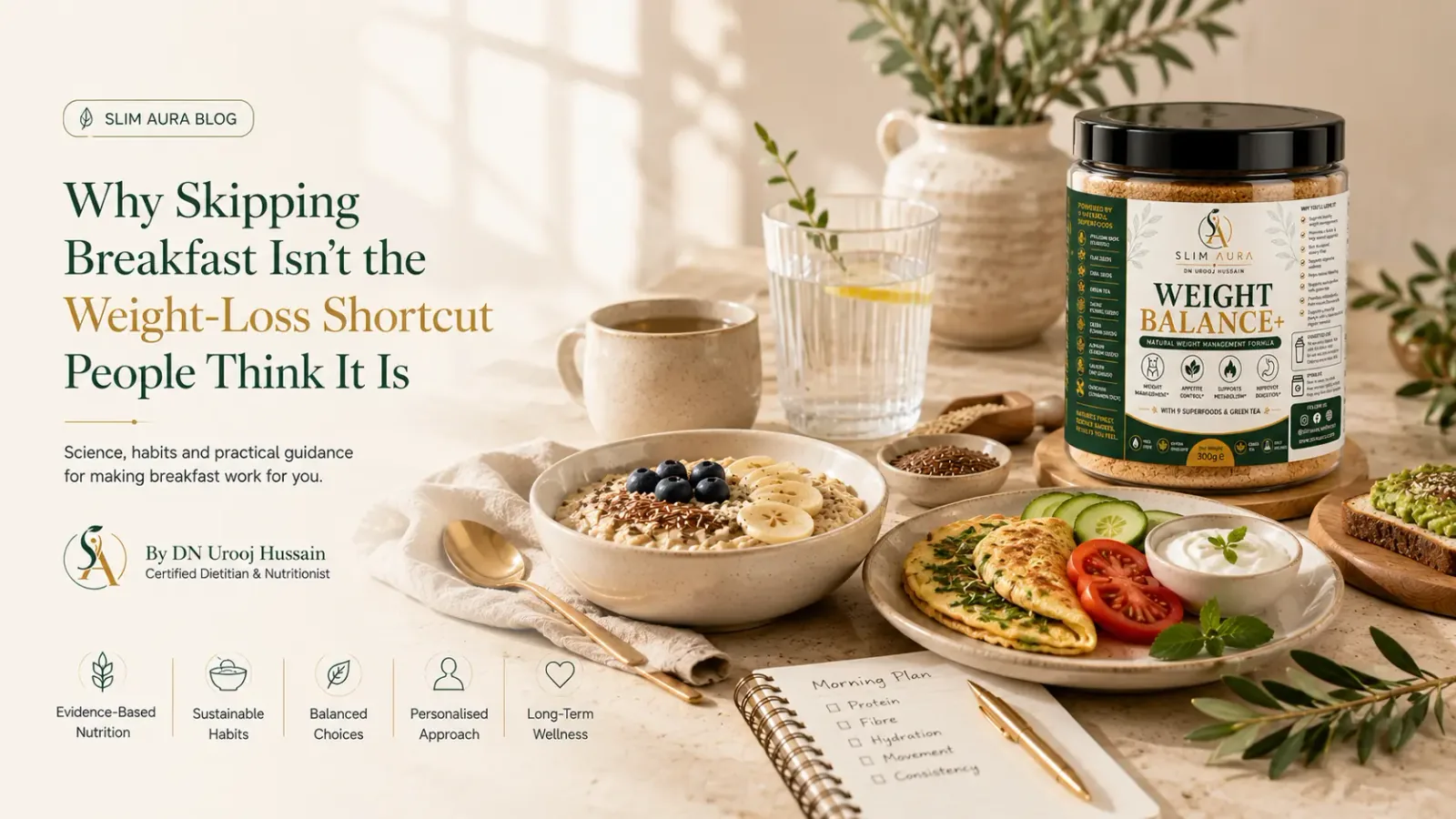
23 August 2026 · 9 min read
Why skipping breakfast isn't the shortcut
Skipping breakfast isn't automatically good or bad for weight management. What matters more is whether the eating pattern you choose actually fits your life.
Read article