Healthy Lifestyle5 October 2026 · 4 min read
Online dietitian consultation in Pakistan: how it works
Considering an online dietitian consultation in Pakistan? Here is exactly what to expect, step by step, and how it compares to an in-clinic visit.
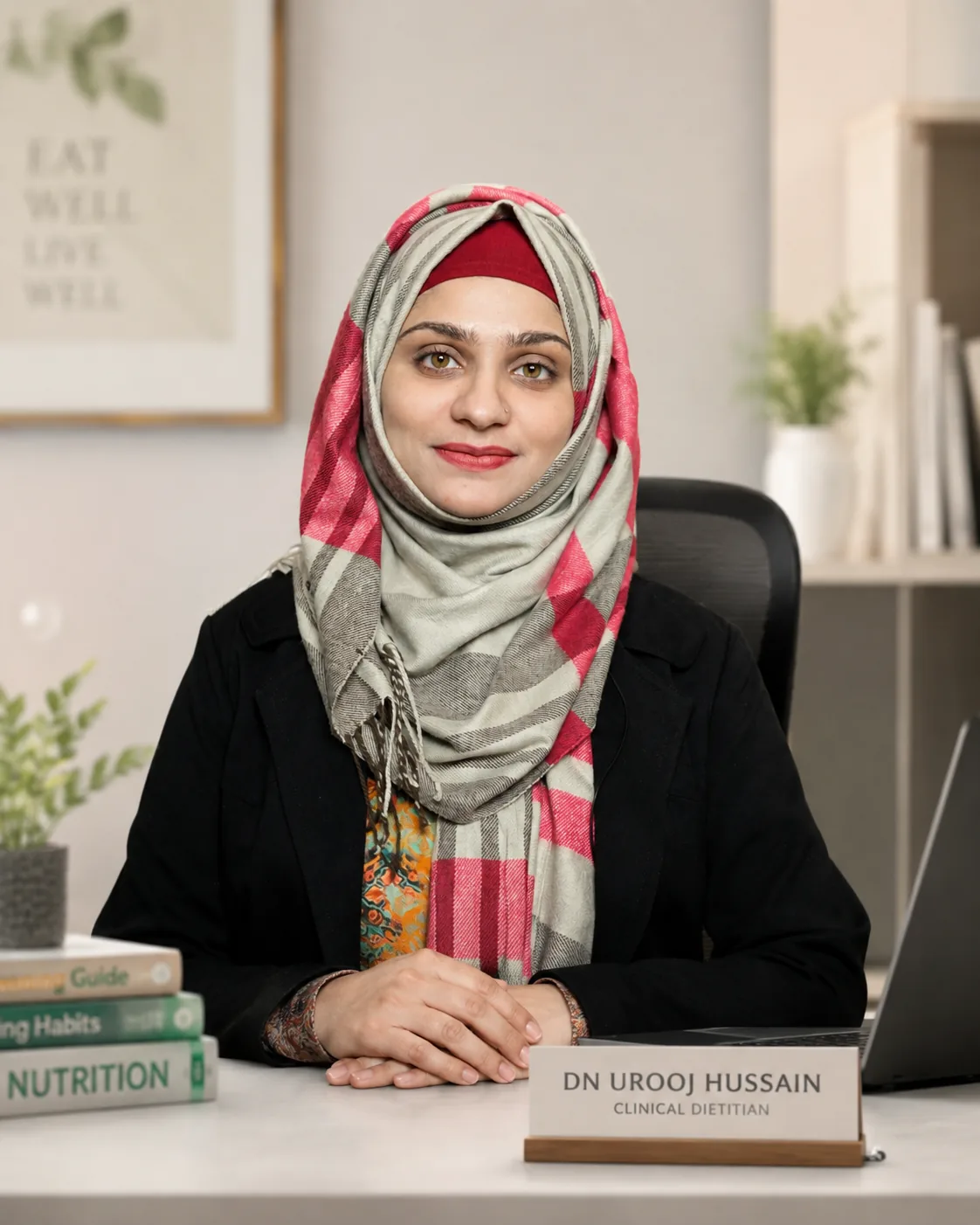
For patients outside Islamabad, or simply too busy for a clinic visit during the day, an online consultation is often the more realistic option — but the uncertainty of "how does this actually work" keeps a lot of people from booking one. Here is exactly what to expect, from someone who runs them regularly.
Is online actually as effective as in-person?
This is worth answering honestly before anything else, because the assumption that online is a lesser substitute is common and, for nutrition counselling specifically, not well supported. A systematic review and meta-analysis of telehealth-delivered dietary interventions found outcomes comparable to in-person care across the conditions studied — nutrition counselling does not rely on physical examination the way some other medical care does, which is exactly why it translates well to video.
The one meaningful exception: in-clinic visits allow for body composition measurement, which a video call cannot replicate. For most nutrition guidance, though, the substance of the consultation is the same either way.
Step 1: booking
Booking is done directly through the website — choosing a consultation type (general nutrition guidance, weight management, PCOS-specific, or a focused follow-up) and a time slot. No referral or prior paperwork is required for a first session.
Step 2: before the appointment
It helps to have a few things ready, though nothing is strictly mandatory: any recent lab reports, a list of current medications or supplements, and a rough note of what you have eaten over the past few days. None of this needs to be formal — a few lines in a notes app is enough.
Step 3: the consultation itself
A first online consultation runs around 45 minutes over video. It opens with a real history — current eating pattern, schedule, medical conditions, medications, and what has or has not worked before — before any recommendation is made. This is deliberate: a plan built without this information is a generic template, not one built for you specifically.
By the end, you leave with a written plan built around food you already eat, not a shopping list of things to buy, along with a clear explanation of the reasoning behind each recommendation.
Step 4: after the consultation
Follow-up sessions are shorter and more focused — reviewing what is working, troubleshooting what is not, and adjusting the plan as needed. Nutrition guidance is not a one-time event; it is iterative, and that is true whether sessions happen online or in-clinic.
Who online consultations tend to suit best
- Anyone outside Islamabad or Rawalpindi, in Pakistan or abroad.
- Busy schedules where a clinic visit during work hours is not realistic.
- Follow-up sessions, where the depth of a first consultation typically is not needed again.
- Anyone who simply prefers the convenience, with no loss of quality in the guidance itself.
A practical note on technology
No special software is needed beyond a stable internet connection and a device with a camera — most consultations run over a standard video call link sent ahead of the appointment. If connectivity is a concern, mentioning it in advance means the session can be structured around it.
“The setting changes. The standard does not — a real history taken before a plan is written, whether that happens across a desk or across a video call.”
If you would like to book a consultation, online or in-clinic, start here. For a sense of what the first session specifically covers, see What to Expect From Your First Dietitian Visit.
This article is provided for general informational purposes and does not constitute medical advice, diagnosis or treatment. Speak to your physician or a qualified practitioner about your own circumstances before making changes, particularly if you are pregnant, nursing, taking medication or managing a medical condition.
Written by
DN Urooj Hussain
Clinical Dietitian & Founder · Doctor of Nutrition (DN)
A clinical dietitian who built the product she kept wishing she could hand her patients.
From the YouTube channel
When to Start Weaning Food? | Baby Ko Solid Food Kab Dena Chahiye? | Dn Urooj Hussain
How To Reverse Fatty Liver | Jigar Ki Charbi Ka Ilaj | Fatty Liver Treatment Symptoms Urdu Hindi
Multivitamin for women after the age of 40 | Multivitamin to Take in Menopause | Dn. Urooj Hussain
More writing like this, twice a month
Related articles

30 June 2026 · 5 min read
Eating well without abandoning your kitchen
Most nutrition advice quietly assumes a Western pantry. Here is how to build a genuinely balanced plate from what a Pakistani household already cooks.
Read article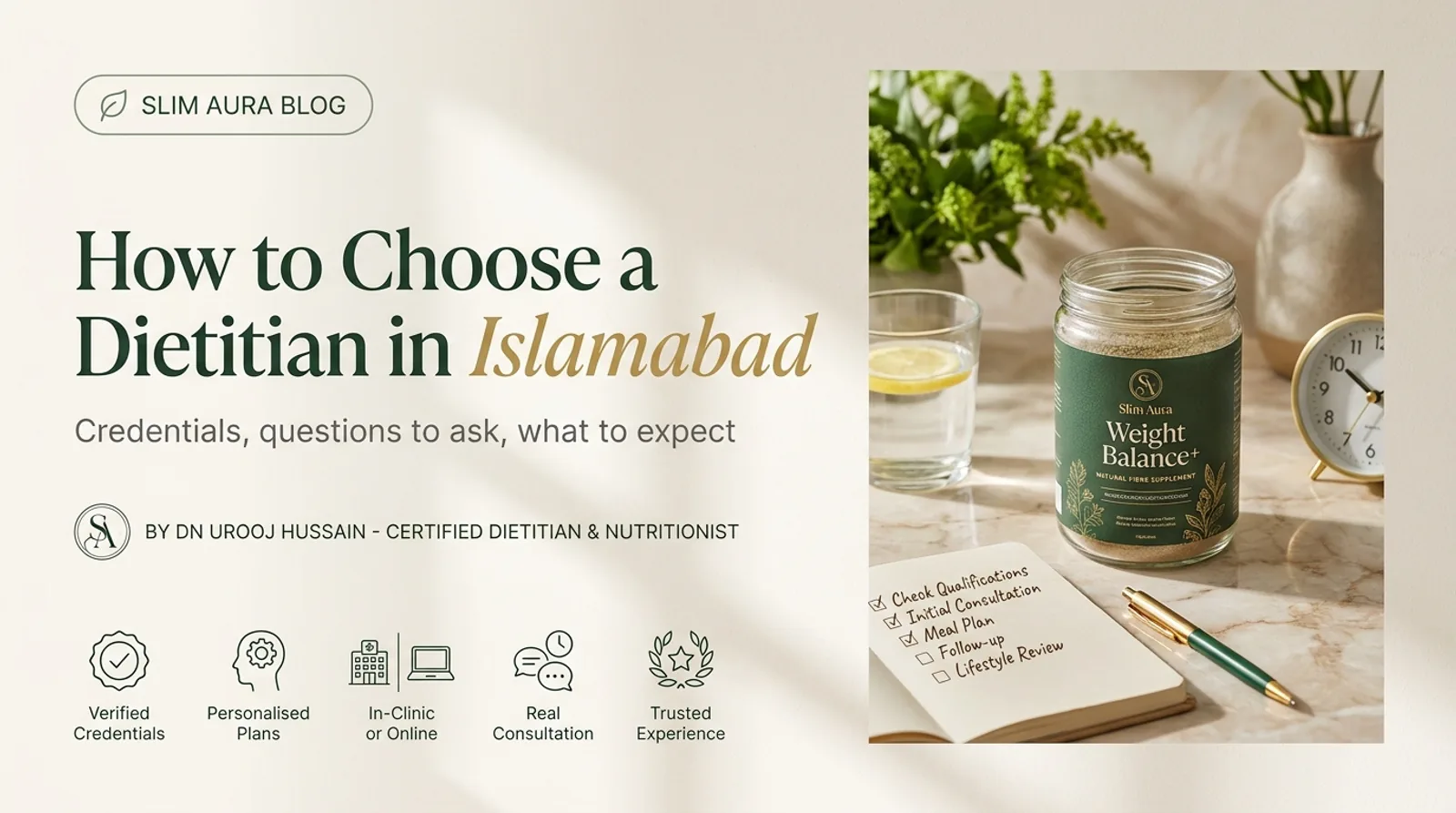
10 September 2026 · 4 min read
How to choose a dietitian in Islamabad
Credentials, questions to ask, and what a first consultation should actually look like — a practical guide to choosing a dietitian in Islamabad you can trust.
Read article
8 September 2026 · 4 min read
Dietitian vs nutritionist: what's the difference
The two titles get used interchangeably in Pakistan, but they are not the same. Here is the real difference, and how to know which one you need in Islamabad.
Read article