Nutrition22 October 2026 · 4 min read
Starting solid foods: a practical weaning guide for new moms
When to start weaning, what to check first, and how to introduce solids safely — a practical, step-by-step guide for first-time mothers from a clinical dietitian.
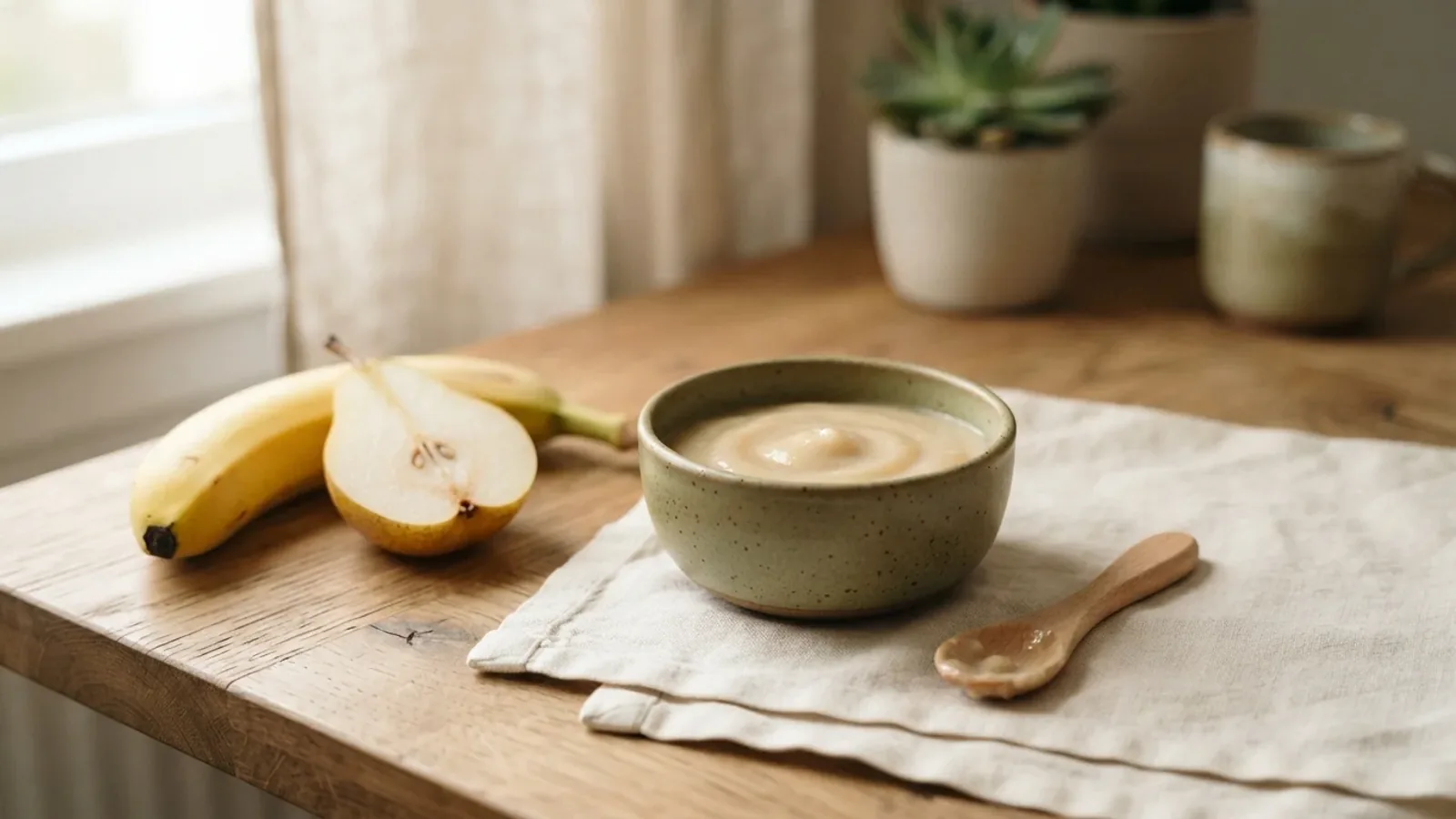
Few questions cause more anxiety for first-time mothers than when, and how, to start solid foods. It is a genuinely important transition, and getting the basics right matters more than any specific recipe. Here is a practical, step-by-step guide.
Before six months, nothing else is needed
For a newborn up to six months old, breast milk or formula alone fully meets every nutritional requirement — carbohydrates, fats, protein and hydration. A baby's stomach is small, and their system is built around liquid feeding at this stage. There is no nutritional gap to fill with solids before six months, regardless of what well-meaning relatives might suggest.
Three signs your baby is ready
Even at six months, readiness is not just about the calendar. Three practical signs are worth checking, ideally alongside your pediatrician:
- A healthy, age-appropriate body weight — tracking close to the recommended weight for age is a reasonable starting signal.
- Good head control — your baby should be able to sit with support and hold their head steady, which matters directly for safe swallowing once solids begin.
- No digestive red flags — check that your baby is not dealing with colic, excess gas or other intestinal discomfort before adding anything new.
Six to eight months: purees only, and why
This window is also typically when teething begins, which means a real choking risk with anything firm. Everything introduced at this stage should be a smooth, lump-free puree — not because babies cannot handle nutrients yet, but because texture safety matters more than variety at this point. Proper carbohydrates, proteins and fats can all be introduced here; they simply need to arrive in puree form.
The single-ingredient rule
This is the part most new parents skip, and it is the most important one. Introduce one ingredient at a time — a mashed banana on its own, a pear on its own, a single boiled and peeled fruit on its own — and keep that same single food going for three consecutive days before introducing anything new.
This is not arbitrary. Three days on the same ingredient lets you clearly see whether your baby develops any allergic reaction or intolerance to that specific food, without a mix of ingredients muddying what caused it. Current feeding guidance also notes that introducing allergenic foods during infancy, rather than delaying them, tends to be the more protective approach — one more reason not to rush several new foods in at once.
“Parents want to move quickly once solids start. The three-day rule feels slow on purpose — it is the only way to know which food is responsible if something goes wrong.”
Start small — one to two tablespoons — and let your baby's own interest guide how much you offer next, rather than a fixed schedule.
Building up: two and three ingredients
Once a single ingredient has been well tolerated for a few days, you can start combining. A homemade cereal, barley or oats puree can take a fruit as a natural sweetener — mashed banana, apple, or boiled and peeled grapes — rather than any added sugar. This is also where a second, then a third ingredient can be introduced, always watching how your baby responds to each new combination.
Why cow's or goat's milk waits until one year
This is a genuinely important rule, not just tradition: pediatric guidance consistently recommends holding off on cow's or goat's milk as a drink until after twelve months. A baby's intestines are not yet equipped to properly absorb the nutrient density of animal milk at this stage, so it can go largely undigested rather than nourishing them the way it is meant to.
For thinning purees before one year, use water, pumped breast milk, or formula instead — never cow's or goat's milk as the liquid base.
If you would like a feeding plan built around your baby's specific age and needs, book a consultation.
This article is provided for general informational purposes and does not constitute medical advice, diagnosis or treatment. Speak to your physician or a qualified practitioner about your own circumstances before making changes, particularly if you are pregnant, nursing, taking medication or managing a medical condition.

Written by
DN Urooj Hussain
Clinical Dietitian & Founder · Doctor of Nutrition (DN)
A clinical dietitian who built the product she kept wishing she could hand her patients.
More writing like this, twice a month
Related articles
4 August 2026 · 4 min read
Why fibre is the nutrient most of us are missing
Most adults get roughly half the fibre they need. Here is what that actually changes day to day — and how to close the gap without overhauling your kitchen.
Read article
23 August 2026 · 8 min read
Bloating and digestive comfort: what helps
Bloating is one of the most common things patients ask about, and one of the least understood. What usually causes it, what helps, and when to see a doctor.
Read article Nutrition
21 September 2026 · 4 min read
Ajwain for bloating: does it work?
Ajwain (carom seeds) has been used in Pakistani kitchens for digestion for generations. Here is what it may actually help with, from a dietitian.
Read article