Exercise14 January 2027 · 4 min read
Strength training for weight loss: why cardio isn't the whole answer
Cardio burns more calories in the moment. Strength training changes what your body is made of — and that difference matters more than most weight-loss advice gives it credit for.
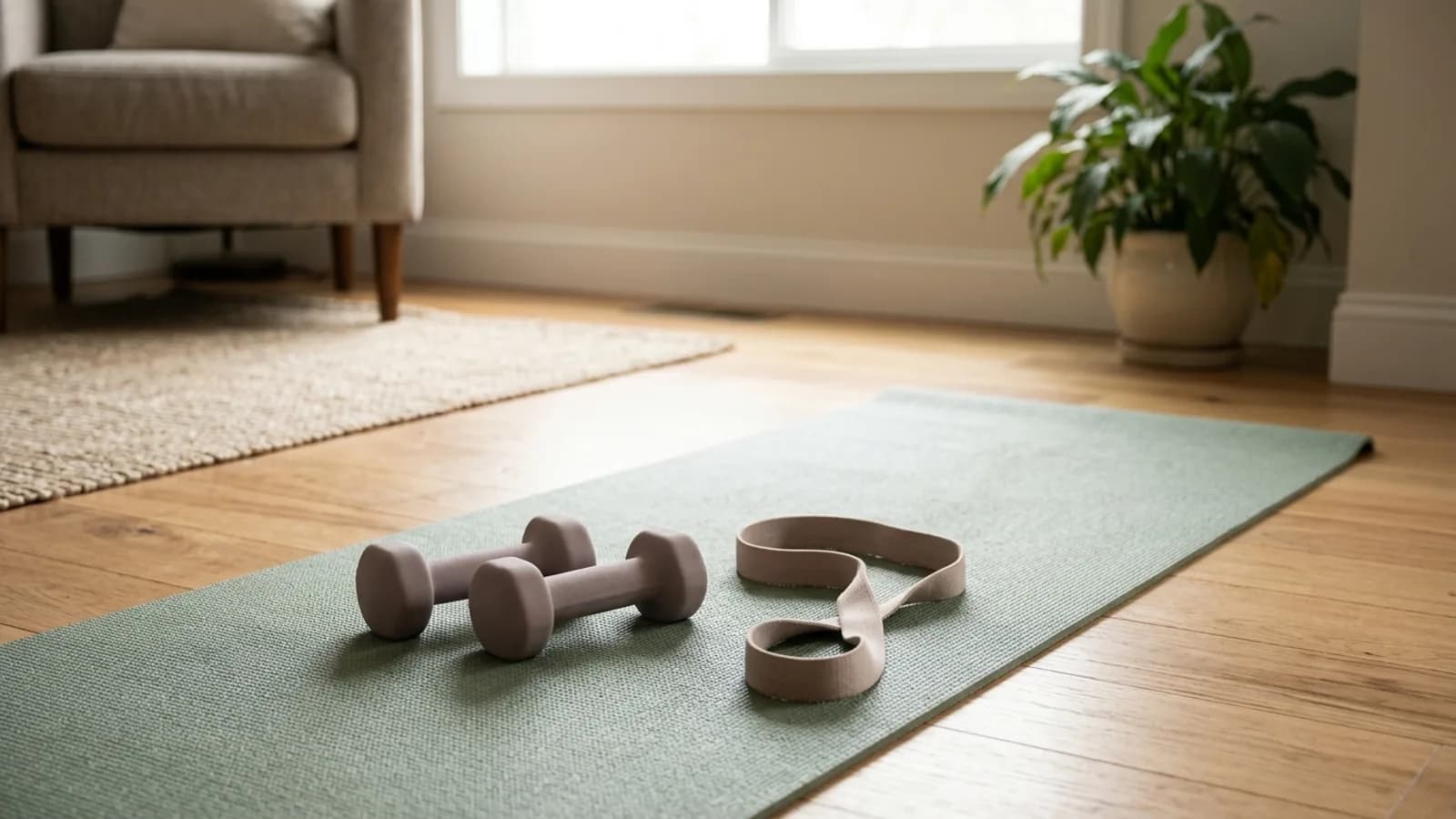
"Should I do cardio or weights?" is one of the most common questions I get about exercise — and the honest answer is that the two do genuinely different jobs, not that one beats the other outright.
What a head-to-head comparison actually found
A comparison of 62 randomized controlled trials found that aerobic exercise programs led to slightly more total fat loss than resistance training alone — about 1.1 kilograms more. But resistance training came out ahead on a different, arguably more important measure: it preserved fat-free mass, adding roughly 0.9 kilograms of it compared with aerobic training.
Why the scale understates the difference
An 18-month comparison makes this concrete: people who walked for exercise lost about 16 pounds of fat but also roughly 4 pounds of muscle over that period. People who did weight training instead lost almost identical fat — about 17 pounds — but only around 2 pounds of muscle. The number on the scale looked nearly the same; what each group was actually made of afterward did not.
The metabolic afterburn most people don't know about
A high-intensity resistance training session can elevate energy expenditure by up to 20 percent above resting rate for as long as 24 hours afterward — a real, if modest, effect that steady-state cardio alone does not replicate to the same degree.
The realistic answer: both, not either
- Resistance training two to three times a week, to build and preserve muscle — the lever cardio alone does not pull.
- Some cardio or consistent daily walking, for cardiovascular health and overall calorie balance.
- Enough protein to actually support the muscle you are training to keep.
“The patients who keep weight off long-term are almost always the ones who added strength training at some point — not the ones who just walked more and more each year.”
Protein intake is what makes strength training actually build and keep muscle — see Protein Intake for Women: How Much Is Actually Enough. For something simpler to start with today, see The Case for a Fifteen-Minute Walk After Dinner. If you would like a plan that combines both, book a consultation.
This article is provided for general informational purposes and does not constitute medical advice, diagnosis or treatment. Speak to your physician or a qualified practitioner about your own circumstances before making changes, particularly if you are pregnant, nursing, taking medication or managing a medical condition.

Written by
DN Urooj Hussain
Clinical Dietitian & Founder · Doctor of Nutrition (DN)
A clinical dietitian who built the product she kept wishing she could hand her patients.
From the YouTube channel
Diet Plan For Menopause | Common Symptoms of Menopause? | what is the age for Menopause?
important tests before marriage | Shadi Se Pehlay Konse Test Karwane Chahye?
Anemia in childeren | Bachun ma khoon ki kami ka elaj | Dietitan/Nutritionist Urooj Hussain
More writing like this, twice a month
Related articles

9 July 2026 · 3 min read
The case for a fifteen-minute walk after dinner
Not a workout. Not a step target. Just fifteen minutes on your feet after the largest meal of the day — and why it is the easiest habit to keep.
Read article
21 August 2026 · 3 min read
Natural approaches to weight management
"Natural" sells a lot of products and explains very little. Here is what genuinely moves the needle — food first, then movement and sleep, always.
Read article
4 August 2026 · 4 min read
Why fibre is the nutrient most of us are missing
Most adults get roughly half the fibre they need. Here is what that actually changes day to day — and how to close the gap without overhauling your kitchen.
Read article